Ayurvedic Treatment for Urticaria (Hives): Understanding Sheetapitta
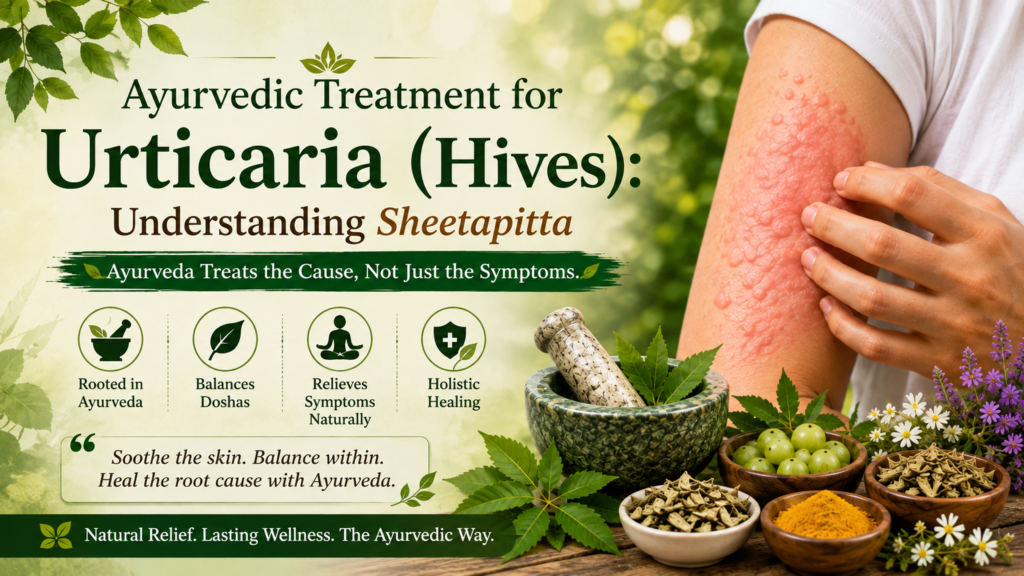
Urticaria, commonly called hives, is a skin condition characterized by sudden, itchy, raised patches or wheel-like structures on the skin. The lesions may appear on different parts of the body, change location, and disappear within a few hours before appearing again elsewhere.
From an Ayurvedic perspective, urticaria is commonly correlated with Sheetapitta, a condition described among disorders involving skin manifestations and dosh disturbance. Ayurveda does not view every case of hives in the same way. The pattern of itching, burning, swelling, dryness, digestive status, diet, lifestyle, and possible triggers can all influence the assessment.
What Causes Urticaria?
Ayurveda approaches the problem through Nidana (causative factors) like inappropriate food combinations, medicine, infections, physical stimuli, and stress; these factors are resulting in disturbance of Doshas.
Sheetapitta is traditionally associated particularly with Vata and Pitta, with Kapha involvement in some presentations. Pitta may contribute to vidaha (burning sensation), redness, and warmth, while Vata can be associated with toda (pricking pain) and rapidly changing skin manifestations. Kapha may become more relevant when there is Kandu (itching) with swelling. Dietary incompatibilities, unsuitable foods, irregular eating habits, disturbed sleep, and exposure to individual triggers may be considered during Ayurvedic assessment.
Common Symptoms of Urticaria
Typical features include the following:
- Raised, reddish or pale wheels
- Burning or pricking sensation
- Intense itching
- Lesions that change location
- Individual lesions that usually fade without leaving a mark
- Swelling of deeper tissues in cases of angioedema
Urticaria can be broadly described as acute when it lasts for less than six weeks and chronic when symptoms continue or recur for more than six weeks. A useful clinical distinction is that not every itchy rash is urticaria. Persistent lesions, bruising, scaling or other unusual features may require evaluation for another skin disorder.
Ayurvedic Approach to Urticaria
The foundation of Ayurvedic treatment for urticaria is Nidana Parivarjana—identifying and avoiding factors that appear to trigger or aggravate symptoms.
This may include reviewing:
- Food combinations and dietary changes
- Heat, cold or pressure exposure
- Stress and sleep patterns
- Skin products and detergents
- Medicines or supplements
- Previous episodes and their circumstances
Ayurvedic management may then be selected according to the individual’s presentation.
Shamana Chikitsa
Palliative treatment may involve appropriately selected herbal medicines and classical formulations according to the patient’s dosha, symptoms and overall condition.
Traditionally used Ayurvedic ingredients may include Haridra (Curcuma longa), Neem (Azadirachta indica), Manjistha (Rubia cordifolia) and other Tikta or Pitta-supportive herbs.
However, there is no single Ayurvedic formulation that is appropriate for every person with urticaria. Internal medicines should be selected by a qualified practitioner after proper assessment.
Shodhana Chikitsa
In selected patients, Ayurveda may consider procedures such as Vamana or Virechana based on the individual’s Dosha involvement, strength, disease pattern and suitability for Panchakarma. These procedures should not be performed routinely simply because a patient has hives. Proper clinical assessment is essential before Shodhana.
Diet and Lifestyle
Dietary management should be individualized rather than based on the assumption that every patient must avoid the same foods.
Keeping a simple food-and-symptom diary can help identify reproducible triggers. Patients should also avoid known personal triggers and maintain regular meals, adequate sleep and appropriate hydration. Stress management through yoga, breathing exercises and relaxation practices may be useful as supportive measures, particularly when stress appears to coincide with flare-ups.
An Ayurvedic approach can focus on individual triggers, symptom patterns, diet, lifestyle, and personalized management, while conventional evaluation and treatment remain important when clinically indicated.
Final Takeaway
Sheetapitta provides an Ayurvedic framework for understanding presentations that resemble urticaria, particularly through the involvement of Vata and Pitta and consideration of causative factors.
The most useful approach is not simply to prescribe a single herb or formulation. It is to identify triggers, assess the clinical pattern, address appropriate dietary and lifestyle factors, and choose treatment according to the individual patient.
For persistent, recurrent, severe, or atypical hives, proper medical evaluation is important before beginning any long-term treatment.