Urticaria (Hives) Ayurvedic Treatment in Tricity: What is Sheetapitta?
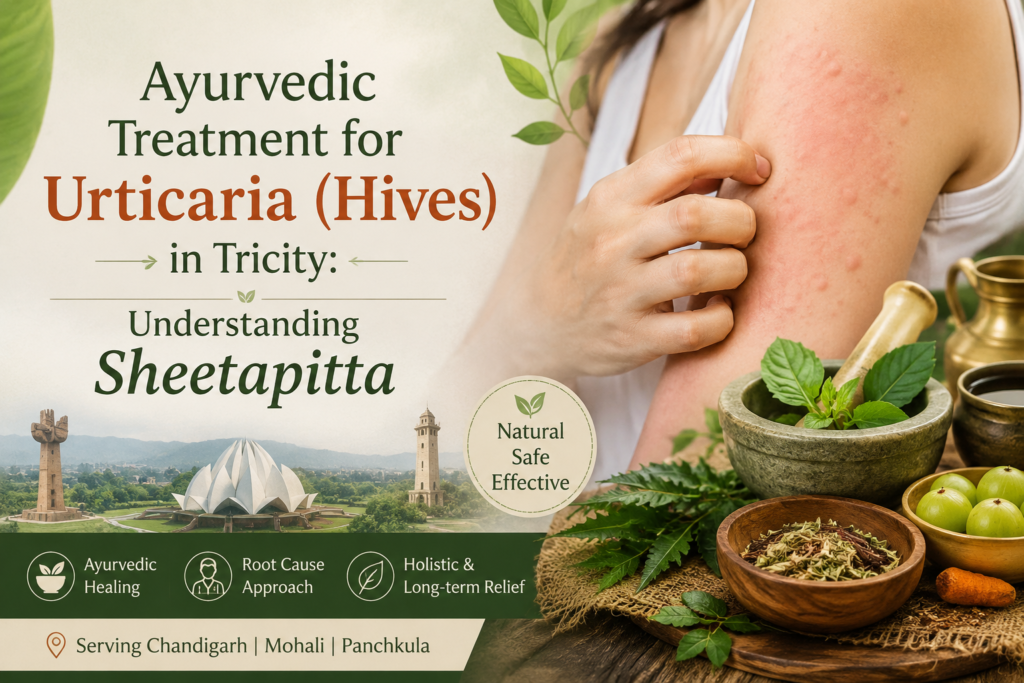
If you know what it’s like to get itchy welts out of nowhere that flare up with cold weather and then disappear as mysteriously as they appeared, you might be suffering from urticaria, or hives. Modern medicine has antihistamines to relieve it quickly, but it keeps coming back for many. This very condition, called Sheetapitta, has been studied for centuries by Ayurveda, and its treatment goes deeper than just managing the symptoms to the underlying imbalance.
What Is Sheetapitta? – Ayurveda View
The name itself is indicative: ‘Sheeta’ means ‘cold’, and ‘Pitta’ is related to the fire element of the body. Sheetapitta is a condition where exposure to cold increases the Pitta-related blood tissue, contrary to expectation. Vata and Kapha doshas also have a role to play. This pattern is discussed in the classical Ayurvedic texts and is related to decreased digestive fire (Agni), formation of toxins (ama) and disturbance of rakta (blood tissue).
Common Causes (Nidana) Ayurveda recognises the following common causes:
Ayurveda points to several everyday triggers:
- Viruddha Ahara – incompatible food combinations (e.g. incompatible textures or temperatures).
- Too much cold exposure – wind, water or food
- Poor digestion – a slow Agni, which doesn’t properly digest foods
- Seasonal transitions – especially into cold weather
Recognising the Signs
The classical texts mention Kandu (severe itching), Pidika (raised patches or wheals) and Daha (a burning sensation), which is very much akin to the present-day description of hives.
Ayurvedic Approach to Treatment
Ayurvedic management is generally done in two stages rather than just suppressing the reaction:
- Shodhana (detoxification): In appropriate cases, cleansing therapies like Vamana or Virechana help in clearing the underlying toxic load.
- Shamana (pacifying care): Classical formulations often incorporate herbs reputed for their blood-purifying and anti-inflammatory properties like Haridra (turmeric), Guduchi, Neem and Khadira, keeping in mind the individual constitution.
Sometimes, external applications like medicated lepa (herbal pastes) may also help to give faster relief.
Diet and Lifestyle are important
Viruddha Ahara being a major trigger, the correction of diet is the central plank in the recovery process. Incompatible food combinations can be avoided. Cold and raw foods can be reduced in flare-ups. Following eating habits appropriate to the season can help significantly reduce the incidence of recurrences.
Why Choose Ayurveda for Recurrent Hives?
For those who suffer from chronic urticaria that keeps recurring despite long-term use of antihistamines, Ayurveda’s approach to treat the root cause – correcting digestion, balancing doshas and purifying the blood tissue – provides a more sustainable path than a cycle of temporary suppression.
Ayurvedic Treatment in Tricity
If you are suffering from recurring hives in Chandigarh, Mohali or Panchkula, an authentic Ayurvedic consultation can help you identify your individual triggers and a treatment plan specific to your constitution, rather than a one-size-fits-all remedy.
Sheetapitta is a well-documented and curable disease in classical Ayurveda. A proper diagnosis and individualised treatment plan will help you find long-term relief, not just temporary symptom control.